
Market & Price Trends
Growth of Automotive Sector & CR Steel Demand
23 Oct 2026
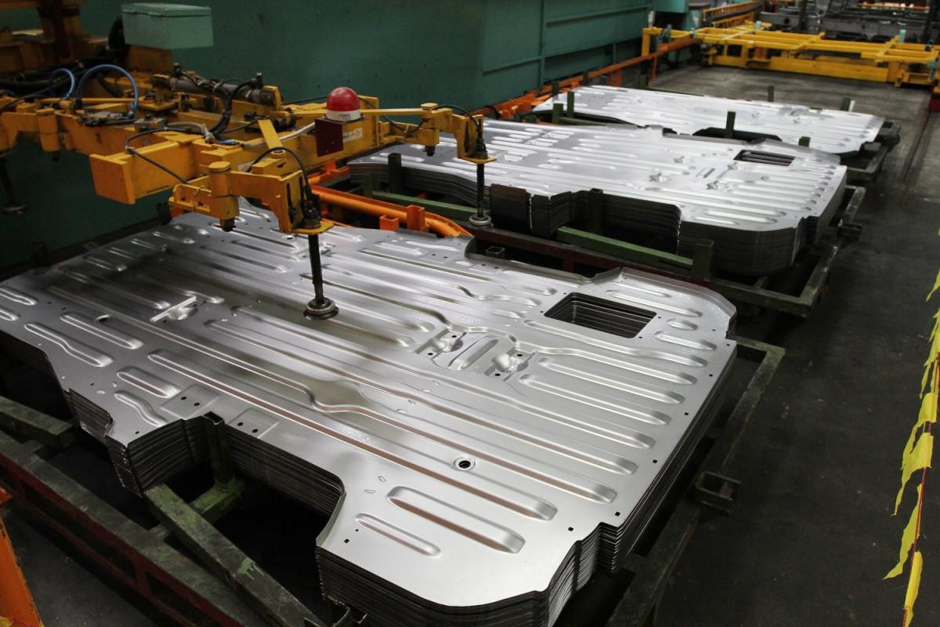
TL;DR: India's automotive growth (vehicle production, EVs, auto-component manufacturing) supports demand for quality CR steel. CR steel offers smooth surface quality, tight tolerances and good formability for stamping and fabrication. Used in body panels, doors and closures, brackets, seat components, and interior and structural parts. There is no single CR grade for every use; selection depends on design, thickness, formability, strength and coating. Key demand drivers: vehicle production, auto-component expansion, electric mobility, manufacturing investment and quality focus.
India's automotive industry is undergoing a major transformation. Rising vehicle production, increasing demand for passenger and commercial vehicles, expansion of electric mobility, growing auto-component manufacturing, and investments in domestic manufacturing are creating new opportunities across the automotive supply chain.
Behind every vehicle is a complex network of materials, components, fabrication processes, and manufacturing technologies. Among these materials, Cold Rolled (CR) Steel plays an important role in producing automotive components that require precision, surface quality, strength, and excellent formability.
From automobile body panels and doors to brackets, structural components, fuel system parts, and various auto components, Cold Rolled Steel is widely used across automotive manufacturing. As India's automotive sector continues to expand, increasing vehicle production and the growth of auto-component manufacturers are expected to support demand for quality CR steel.
Why Cold Rolled Steel Is Important for Automotive Manufacturing
Automotive manufacturers require materials that can meet demanding requirements for strength, dimensional accuracy, surface finish, formability, and consistency.
Cold Rolled Steel is produced by further processing hot rolled steel, typically through rolling at or near room temperature. This additional processing provides a smoother surface, tighter dimensional tolerances, and improved consistency compared with conventional hot rolled products. These characteristics make CR steel particularly suitable for automotive applications where precision and appearance are important.
- Excellent surface quality: body panels and visible parts often require smooth and uniform surfaces before painting or coating
- Good formability: manufacturers can perform stamping, bending, pressing, and forming efficiently
- Consistent quality: in high-volume production, even small variations in thickness, surface condition, or mechanical properties can affect production efficiency and component quality
Applications of CR Steel in the Automotive Industry
Cold Rolled Steel is used across multiple stages of vehicle and auto-component manufacturing.
| Application | Typical Components |
|---|---|
| Automotive Body Panels | Door panels, roof panels, hood components, fenders, trunk panels, and interior body panels |
| Automobile Doors and Closures | Inner and outer panels, reinforcements, brackets, and supporting parts |
| Auto Components and Brackets | Brackets, mounting components, seat components, supports, reinforcement parts, electrical enclosures, automotive hardware, and fabricated components |
| Interior and Structural Components | Seat structures, dashboard-related components, mounting brackets, and reinforcement parts |
The smooth surface of CR steel provides a suitable base for automotive painting and coating, and its formability allows manufacturers to produce complex panel shapes while maintaining dimensional consistency. For doors, consistent thickness and surface quality are particularly important because these components must fit accurately during vehicle assembly.
Auto-component manufacturers often require steel with consistent properties to support high-volume stamping and fabrication, and CR steel lets manufacturers produce components with controlled dimensions and repeatable manufacturing performance.
Growth of India's Automotive Industry Is Supporting Steel Demand
India has become one of the world's major automotive manufacturing hubs, with a large ecosystem covering passenger vehicles, commercial vehicles, two-wheelers, three-wheelers, tractors, and auto components. The industry's growth is being supported by several factors:
- Rising vehicle ownership
- Urbanization
- Growing middle-class consumption
- Expansion of road and logistics infrastructure
- Increasing domestic manufacturing
- Growth of electric vehicles
- Expansion of automotive component production
- Increasing investments in manufacturing capacity
As vehicle production increases, demand also rises for the materials required to manufacture vehicle bodies, components, assemblies, and supporting parts. This creates a direct connection between automotive production and demand for steel products, including Cold Rolled Steel.
Electric Vehicles Are Creating New Material Opportunities
The transition toward electric mobility is changing the automotive manufacturing ecosystem. Electric vehicles require many conventional automotive components while also introducing new requirements related to batteries, electrical systems, motors, enclosures, and lightweight vehicle structures.
This growing EV ecosystem is encouraging automotive manufacturers and component suppliers to focus on materials that offer the required combination of strength, formability, dimensional accuracy, and manufacturing efficiency. While material requirements vary significantly by component and vehicle design, the expansion of EV manufacturing adds another growth area for India's automotive steel supply chain.
The development of battery manufacturing, electric vehicle assembly, charging infrastructure, and EV component production is therefore contributing to the broader expansion of the automotive manufacturing ecosystem.
Automotive Component Manufacturing Is Expanding
The growth of India's automotive industry is not limited to vehicle manufacturers. A large network of Tier 1, Tier 2, and Tier 3 auto-component manufacturers supplies parts and assemblies to automobile companies, from stamped components and brackets to structural assemblies, electrical parts, seating components, and exhaust systems.
Many of these processes require steel with specific thicknesses, surface characteristics, and mechanical properties. As India's auto-component ecosystem expands, demand for specialized steel products is also increasing. For steel suppliers and aggregators, this creates opportunities to support manufacturers with reliable sourcing, product availability, and consistent delivery.
Why Surface Quality Matters in Automotive Steel
Automotive components often undergo multiple finishing processes before becoming part of a finished vehicle, including painting, powder coating, galvanizing, stamping, forming, welding, and surface treatment.
A consistent steel surface can help manufacturers achieve better results during downstream processing. For visible components, surface appearance is particularly important because the final product must meet both functional and aesthetic requirements. This is one reason Cold Rolled Steel remains an important material where surface quality and dimensional consistency are critical.
CR Steel Grades and Automotive Requirements
Automotive manufacturers do not use one universal grade of Cold Rolled Steel for every application. Material selection depends on factors such as:
- Component design
- Thickness requirements
- Formability
- Strength requirements
- Stamping process
- Surface finish
- Coating requirements
- End-use application
What Is Driving Future CR Steel Demand in India?
Several structural developments are expected to influence future demand for Cold Rolled Steel in India's automotive sector.
- Increasing Vehicle Production: growing production of passenger vehicles, commercial vehicles, two-wheelers, and other automotive products increases the requirement for steel-based components
- Expansion of Auto-Component Manufacturing: new facilities and capacity expansion can increase demand for CR steel used in stamping, fabrication, and component production
- Growth of Electric Mobility: EV manufacturing is creating new production ecosystems involving vehicles, batteries, electrical components, motors, and associated systems
- Manufacturing Investments: continued investment in India's manufacturing infrastructure can strengthen the domestic automotive supply chain and increase demand for industrial steel
- Greater Focus on Product Quality: as manufacturers move toward higher-quality and more advanced vehicles, material consistency, surface quality, and dimensional accuracy become increasingly important
Why Choose Enlight Metals for CR Steel?
At Enlight Metals Private Limited, we understand that automotive manufacturers and auto-component companies require more than just steel availability. They need reliable sourcing, consistent quality, competitive pricing, and dependable delivery.
Enlight Metals supports industrial buyers with sourcing and supply solutions for Cold Rolled Steel and other industrial steel products. Our approach combines verified sourcing, supplier coordination, price discovery, logistics support, and customer-focused execution to help manufacturers simplify their steel procurement process.
Conclusion
India's automotive industry is entering an important phase of expansion driven by vehicle production, auto-component manufacturing, electric mobility, and increasing investment in domestic manufacturing. As this ecosystem grows, the requirement for high-quality steel products will continue to increase.
Cold Rolled Steel remains an important material for automotive manufacturing because of its surface quality, dimensional accuracy, formability, and suitability for various stamping and fabrication processes. From vehicle body panels and doors to brackets, supports, structural components, and auto parts, CR steel supports numerous applications throughout the automotive value chain.
For manufacturers operating in India's growing automotive ecosystem, dependable access to quality CR steel can play an important role in maintaining production efficiency and consistent product quality. As the sector continues to evolve, demand for precision-oriented steel products is expected to remain an important part of the country's broader industrial growth.