
Buying Guides
Common Applications of GP Sheets in Manufacturing and Construction
22 Oct 2026
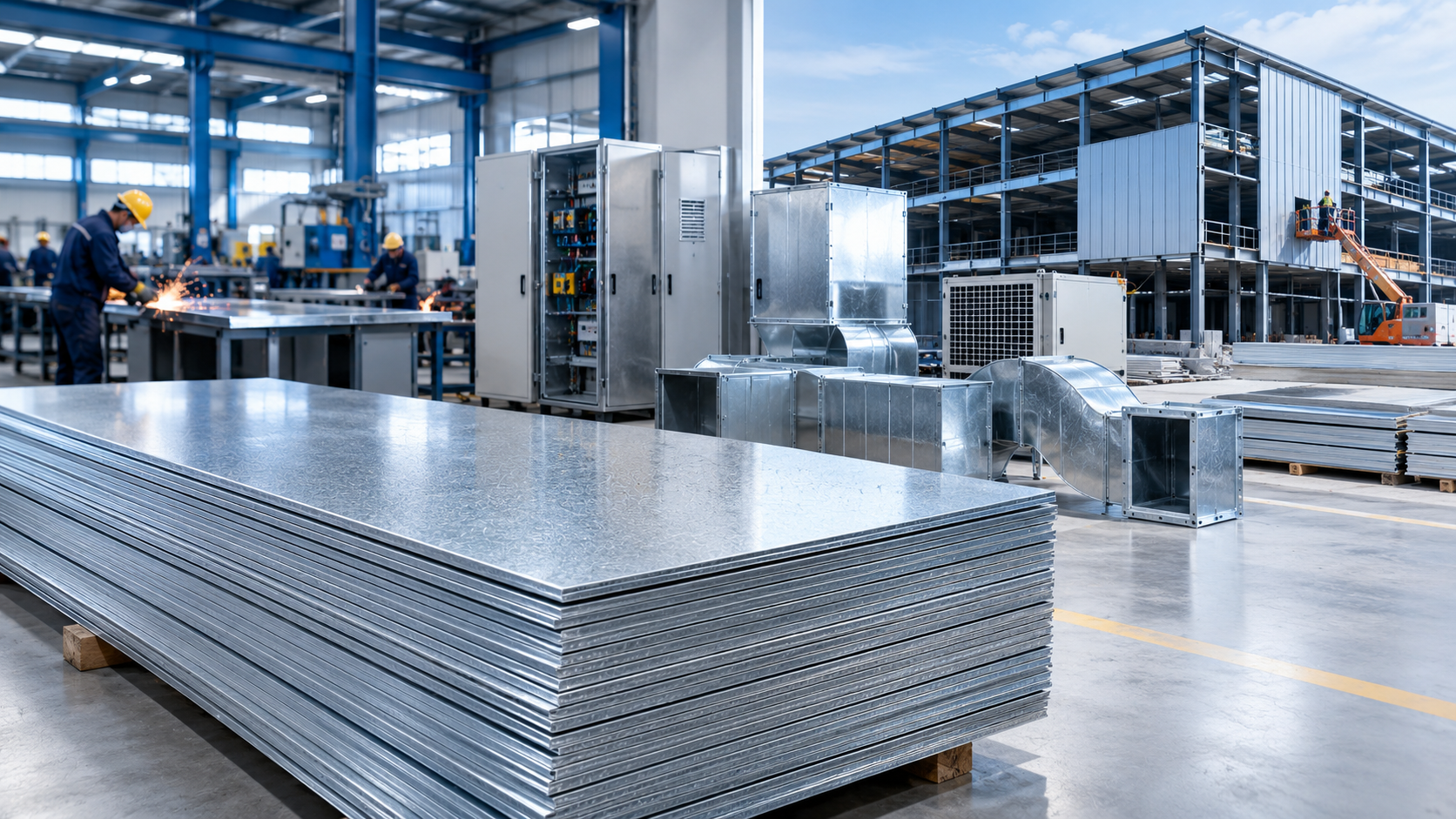
TL;DR: GP (Galvanized Plain) sheets combine the strength of steel with the corrosion protection of a zinc coating. Common uses: electrical panels, HVAC ducting, roofing accessories, machinery housings, storage equipment, and cable management. A zinc coating alone does not decide load capacity; steel grade, thickness, and design matter. General-purpose GP sheets are not interchangeable with automotive-grade galvanized steel. Define thickness, grade, coating, finish, and exposure before buying to avoid material mismatch.
Introduction
Galvanized Plain (GP) sheets are widely used across manufacturing and construction because they combine the strength of steel with the corrosion protection provided by a zinc coating. Their versatility, formability, and availability in different thicknesses make them suitable for applications ranging from electrical enclosures and industrial equipment to roofing components and building accessories.
As industrial infrastructure expands and manufacturing requirements evolve, GP sheets continue to serve as an important material for fabricators, OEMs, construction companies, and industrial equipment manufacturers.
Understanding the common applications of GP sheets helps businesses select suitable materials based on product design, environmental conditions, fabrication requirements, and operating needs.
1. Electrical Panels and Enclosures
Electrical panels and enclosures are important applications of GP sheets in industrial manufacturing. These components house electrical equipment, control systems, wiring, and distribution devices that require suitable physical protection.
GP sheets can be cut, bent, punched, and formed into panel bodies, covers, cabinets, and enclosure components. Their corrosion-resistant coating can help protect the material in appropriate indoor and industrial environments. Manufacturers typically select the material according to enclosure design, sheet thickness, surface finish, and fabrication requirements.
2. HVAC Systems and Air Ducting
Heating, ventilation, and air-conditioning (HVAC) systems use sheet metal components to distribute air throughout residential, commercial, and industrial buildings.
Galvanized steel is commonly used for air ducts, duct fittings, ventilation channels, and associated sheet metal components. Its formability supports the production of rectangular and circular duct sections, bends, transitions, and connectors.
The zinc coating helps protect the steel against corrosion under suitable operating conditions. However, material selection must consider humidity, condensation, indoor air quality requirements, and the environment in which the ducting operates.
3. Roofing and Building Components
GP sheets and other galvanized steel products are used in selected roofing and building applications, particularly where sheet metal components require corrosion protection and ease of fabrication.
Applications may include roofing accessories, flashing, fascia components, building trims, and other formed sheet metal parts. The suitability of GP sheets for exposed roofing depends on the coating specification, weather conditions, product design, and expected service life.
4. Industrial Machinery and Equipment
Manufacturing industries require sheet metal components for machine covers, protective guards, equipment housings, and selected enclosure assemblies. GP sheets can be suitable for these applications when the required mechanical properties and coating specifications are met.
Their formability supports manufacturing processes such as bending, punching, and stamping. The zinc coating can also help protect components from routine environmental exposure.
5. Storage Systems and Warehouse Equipment
Warehouses, factories, and distribution centres use a range of fabricated steel products for organising materials and supporting operational efficiency. Depending on the design and load requirements, galvanized sheet steel may be used in storage cabinets, shelving components, bins, partitions, and selected storage system accessories.
For load-bearing racks and heavy-duty storage systems, the base steel grade, thickness, structural design, and applicable safety requirements must be evaluated carefully. The presence of a zinc coating alone does not establish the load capacity of a finished product.
6. Construction Accessories and Fabricated Components
Construction projects require numerous metal accessories that support installation, protection, and finishing work. Galvanized steel sheets can be processed into different components according to the project requirements.
Potential applications include selected brackets, covers, flashing, protective panels, and formed accessories. The corrosion protection offered by the zinc coating can be useful where components are exposed to normal environmental conditions. The appropriate material depends on whether the component is indoors or outdoors, whether it carries structural loads, and how it will be fixed or joined.
7. Automotive and Component Manufacturing
Automotive and component manufacturers use a variety of coated steel products for parts that require specific surface quality, formability, and corrosion protection. Galvanized steel may be suitable for selected brackets, housings, covers, and other formed components, depending on the automotive specification and manufacturing process.
8. Cable Management and Electrical Infrastructure
Electrical infrastructure in commercial and industrial facilities requires systems to route, organise, and protect cables. Galvanized steel products are used in certain cable management applications, including covers, enclosures, and associated sheet metal components. Cable trays themselves may be manufactured from galvanized steel, depending on the product design, coating system, and operating environment.
For demanding installations, buyers should assess the required coating protection, load capacity, installation conditions, and applicable electrical or project specifications.
Key Factors to Consider When Selecting GP Sheets
Before procuring GP sheets for manufacturing or construction, buyers should evaluate the following factors:
- Thickness: confirm the required thickness based on component design and fabrication needs
- Steel grade: select a grade that meets the required strength and forming characteristics
- Zinc coating: verify the coating specification against the intended operating environment
- Surface quality: establish acceptable surface finish and appearance requirements
- Fabrication process: consider bending, punching, stamping, welding, and other processing requirements
- Environmental exposure: assess moisture, condensation, chemicals, and outdoor exposure
- Quality documentation: confirm relevant product standards, inspection records, and material certificates where required
Selecting GP sheets according to these parameters helps reduce material mismatch, fabrication issues, and avoidable procurement costs.
How Enlight Metals Supports Industrial Steel Sourcing
Enlight Metals helps manufacturers, OEMs, fabricators, EPC companies, and industrial buyers source and procure steel through verified suppliers, competitive pricing, and coordinated delivery across India.
For businesses requiring GP sheets and coils, defining the application, material thickness, steel grade, coating requirements, quantity, and delivery location helps establish a clear sourcing requirement. By aligning material specifications with actual industrial needs, buyers can evaluate suitable procurement options for manufacturing and construction applications.
Conclusion
GP sheets serve a wide range of applications across manufacturing and construction, including electrical enclosures, HVAC ducting, building accessories, machinery housings, storage equipment, and selected cable management components.
Their suitability depends on more than the presence of a zinc coating. Steel grade, thickness, coating specification, fabrication requirements, and environmental exposure all influence product performance. For industrial buyers, understanding these applications is an important first step towards selecting the right galvanized steel product for each requirement.