
Buying Guides
Why Is Zinc Coating Important in Steel Products?
22 Oct 2026
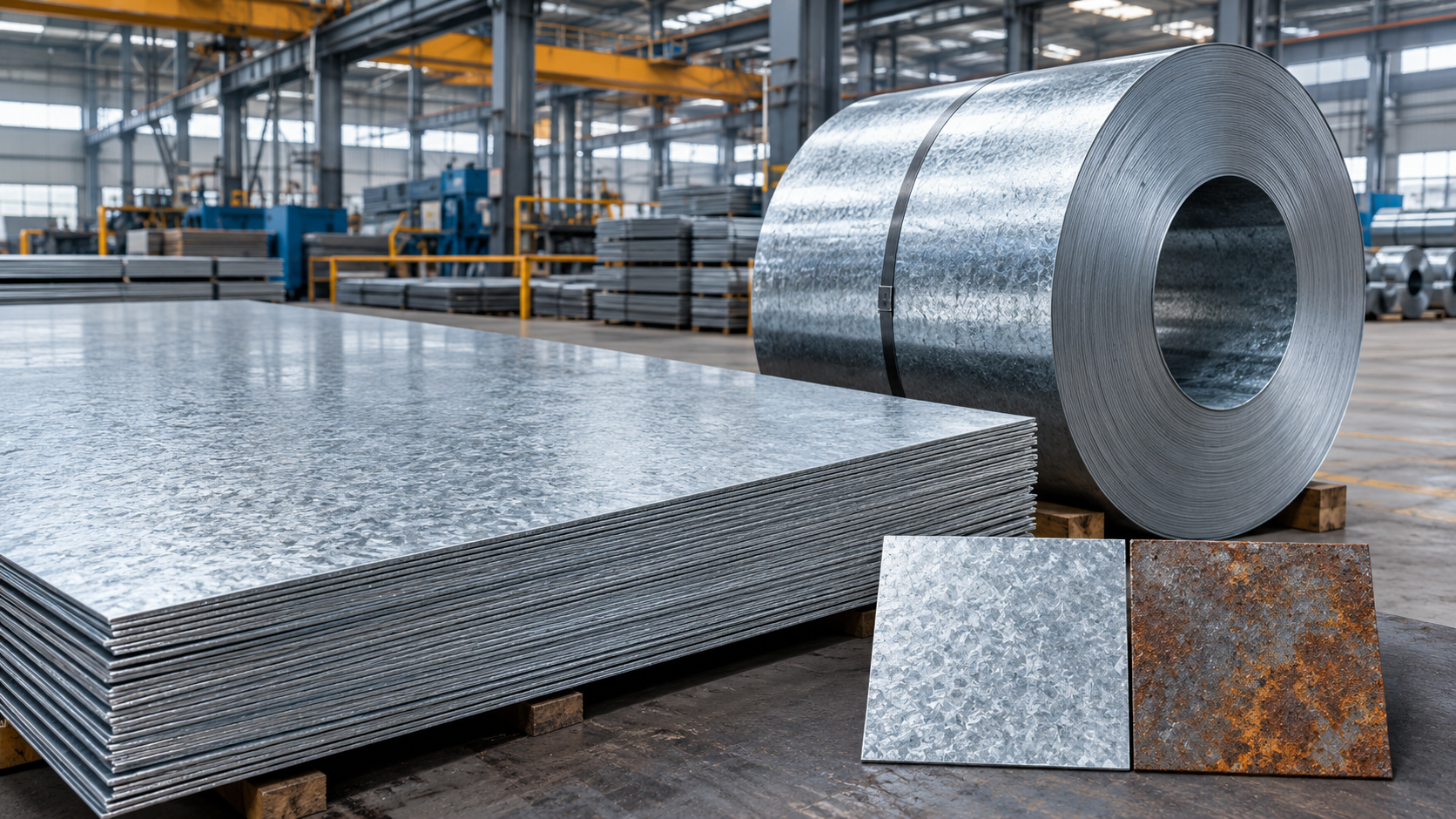
TL;DR: Zinc coating acts as a barrier against moisture and oxygen, and can also protect steel sacrificially where the coating is damaged. It can extend service life and reduce corrosion-related maintenance, but it is not maintenance-free in every environment. Coating thickness, coating mass basis, and base steel grade should be confirmed before purchase. Compare total life-cycle cost, not just the initial price per kilogram or tonne. Coastal, chemical, or persistently moist environments may need extra protection or a different system.
Introduction
Steel is widely used in manufacturing, construction, infrastructure, and industrial applications because of its strength, versatility, and suitability for fabrication. However, when exposed to moisture, oxygen, and certain environmental conditions, untreated steel can develop rust and corrosion. Over time, this can affect its appearance, performance, and service life.
Zinc coating plays an important role in protecting steel against corrosion. By applying a layer of zinc to the steel surface, manufacturers can improve its resistance to environmental exposure and make it suitable for a wide range of applications.
Understanding the importance of zinc coating in steel helps buyers select suitable materials based on application requirements, operating conditions, durability expectations, and cost considerations.
What Is Zinc Coating on Steel?
Zinc coating is a protective layer applied to steel to reduce the risk of corrosion. The zinc acts as a barrier between the steel surface and its surrounding environment. It also provides sacrificial protection: zinc tends to corrode preferentially to the underlying steel when the coating is damaged, and the conditions allow this protective action.
Galvanized steel is a common example of zinc-coated steel. Depending on the manufacturing process, zinc can be applied through methods such as hot-dip galvanizing or electro galvanizing.
Zinc-coated steel is available in different forms, including galvanized steel sheets, galvanized steel coils, and other processed products. The appropriate coating type and specification depend on the intended application and required performance.
1. Protection Against Corrosion
One of the primary reasons zinc coating is used in steel products is to reduce corrosion. When bare steel is exposed to moisture and oxygen, rust can form on its surface. Zinc coating helps limit direct contact between the steel and the surrounding environment. In addition, zinc can provide sacrificial protection at small, exposed areas, helping protect the steel under suitable conditions.
This makes zinc-coated steel useful in applications where components may encounter humidity, occasional water exposure, or changing environmental conditions.
2. Improved Durability and Service Life
Zinc coating can help extend the service life of steel components by slowing corrosion and reducing premature deterioration. In manufacturing and construction, replacing corroded components can lead to additional material, labour, maintenance, and downtime costs. Selecting appropriately coated steel can help reduce these risks.
Galvanized steel sheets and coils are therefore commonly considered for products such as electrical enclosures, HVAC ducting, building components, industrial cabinets, and fabricated parts.
The expected service life varies according to the zinc coating specification, the environment, the quality of fabrication, and how the finished component is installed and maintained.
3. Better Suitability for Manufacturing Applications
Zinc-coated steel is used across manufacturing because it combines the properties of a steel base material with a protective surface coating. Depending on the grade and product specification, it can be suitable for processes such as cutting, bending, forming, and fabrication. This makes it useful for manufacturers producing components that require both structural performance and corrosion protection.
Common examples include:
- Electrical panels and control cabinets
- Industrial enclosures and equipment housings
- HVAC ducts and ventilation components
- Cable management components
- Storage systems and fabricated assemblies
4. Support for Construction and Infrastructure
Steel products used in construction may be exposed to humidity, rain, airborne pollutants, or other environmental conditions. Zinc coating can help protect suitable steel components from corrosion and support longer-term performance. Galvanized steel is commonly used in building accessories, roofing-related components, support elements, ventilation systems, and various fabricated construction products.
The right specification depends on the location and nature of the application. Indoor components in controlled environments may have different coating requirements from products installed outdoors or in industrial environments.
5. Reduced Maintenance Requirements
Corrosion can create recurring maintenance requirements, including inspection, surface preparation, repainting, and replacement of damaged components. An appropriate zinc coating can reduce the rate of corrosion and help lower maintenance needs over the product's service life. This can be particularly valuable where components are difficult to access or where maintenance interruptions affect operations.
6. Cost Efficiency Over the Product Life Cycle
When purchasing steel, buyers often focus on the initial price per kilogram or tonne. While purchase price is important, the total cost of ownership also includes fabrication, installation, maintenance, downtime, and potential replacement.
Zinc-coated steel may offer better long-term value when its corrosion protection reduces these additional costs. The actual benefit depends on the application's requirements, the coating specification, and the expected service conditions. A cost-effective purchasing decision should therefore consider both the initial material cost and the performance expected over the product's working life.
7. Importance of Zinc Coating Thickness and Quality
Not all zinc-coated steel products provide the same level of corrosion protection. Coating quality and thickness are important factors when comparing materials. Buyers should review the following details before placing an order:
- Coating specification: confirm the required coating designation and applicable standard
- Coating mass or thickness: check the specified value and the method used to express it
- Base steel grade: ensure the material meets the mechanical and fabrication requirements
- Surface quality: check for defects that could affect processing or final appearance
- Forming and joining requirements: confirm suitability for bending, welding, fastening, or other fabrication processes
- Environmental exposure: match the product specification to the operating conditions
8. Common Applications of Zinc-Coated Steel
Zinc-coated steel is used across a variety of industries. Typical applications include:
| Industry | Typical Applications |
|---|---|
| Electrical and Electronics | Control panels, electrical cabinets, enclosures, and equipment housings |
| HVAC and Ventilation | Air ducts, ventilation components, and related fabricated products |
| Construction | Building accessories, roofing-related components, and selected support applications |
| Industrial Manufacturing | Machine covers, equipment housings, and fabricated assemblies |
| Warehousing and Storage | Cabinets, storage components, and other formed steel products |
| Cable Management | Selected cable trays, covers, and associated components, depending on product design and coating requirements |
The suitability of zinc-coated steel should always be assessed against the specific product design, exposure conditions, fabrication method, and relevant technical standards.
9. Zinc-Coated Steel vs. Uncoated Steel
The key difference is the presence of a protective zinc layer. Uncoated steel may be appropriate where the component will receive another effective protective treatment or operate in a controlled environment. Zinc-coated steel may be preferable when corrosion resistance is an important requirement.
| Factor | Zinc-Coated Steel | Uncoated Steel |
|---|---|---|
| Surface protection | Zinc coating helps protect against corrosion | Requires suitable protection where corrosion is a concern |
| Maintenance | May reduce corrosion-related maintenance | Depends on the applied protection and exposure |
| Initial material cost | Can be higher, depending on specification | May be lower before additional treatment |
| Typical selection | Applications requiring integrated corrosion protection | Applications where another coating or protection system is planned |
10. How to Select the Right Zinc-Coated Steel
Before sourcing galvanized steel sheets or coils, buyers should establish the technical and commercial requirements. Start by defining the product's end use, required steel grade, thickness, dimensions, coating specification, surface finish, and processing requirements. Next, assess the environment in which the finished component will operate.
It is also important to confirm the relevant quality documentation, applicable standards, quantity requirements, and delivery schedule. Clear specifications help suppliers identify suitable materials and reduce the risk of mismatches during production or fabrication.